
Hot and humid summers can pose risks. Know how to recognise the signs of heat illness and take preventive action to reduce your risk.
How your body regulates temperature
To understand how you can prevent heat-related illnesses, it’s important to first understand how your body regulates its temperature. The human body temperature is normally 37°C regardless of the environmental temperature, as it is regulated by your body’s natural feedback system. When the outside temperatures rise, there are various ways that your body tries to cool itself to maintain a normal temperature.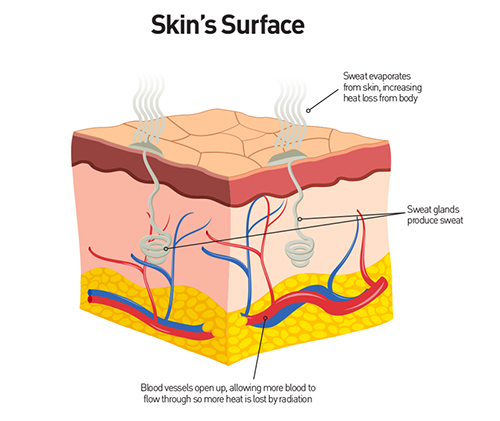
When your temperature rises, the brain sends a signal to your blood vessels, sweat glands and muscles to assist in lowering the temperature. Your blood vessels begin to dilate, enabling blood to flow near the surface and allowing your body to reduce internal temperature by radiating heat loss outwardly. You also start to sweat onto the skin; the water evaporates removing heat from the skin and creating a cooling effect.
How to recognise heat-related illnesses
Heat-related illnesses include itchy rashes, muscle cramps, swelling, rapid breathing, fainting, heat exhaustion, and heatstroke, a medical emergency that occurs when the body cannot regulate its temperature.
Heatstroke is a serious condition. Symptoms include high temperature, altered behaviour such as feeling disoriented, lack of sweating, nausea, flushed skin, rapid breathing, fast heart rate and headache.
If you think that you or someone else may be experiencing heatstroke, take immediate action by contacting emergency services or visiting your local emergency department. Find a cool place to rest and rehydrate, and lower body temperature by any means possible - use cold water, air-conditioning or fanning, ice packs, or cold wet towels on the head, neck and armpits.
How to prevent heat-related illnesses
- Wear loose-fitting clothing, when possible. Your body can’t cool itself efficiently if you wear tight or heavy clothing. Loose and light clothing can help prevent overheating.
- Shield your skin from the sun. Sunburn makes it more difficult for your body to cool itself and can increase the risk of developing skin cancer. Always protect yourself by wearing sunglasses and sunscreen with a minimum of SPF 15.
- Shield your skin from the sun. Sunburn makes it more difficult for your body to cool itself. Always protect yourself by wearing sunglasses and sunscreen with a minimum of SPF 15.
- Drink plenty of fluids. When you’re dehydrated, the risk of overheating increases. Consume enough water to help your body produce sweat and keep you cool.
- Be careful when taking certain medications. Some medications can increase the risk of dehydration or affect your body’s cooling. Ask your doctor about your medication.
- Never leave someone in a parked car. Leaving someone in a parked car, especially during warmer months, is a leading cause of heat-related illnesses and can have serious health consequences.
- If possible, stay inside during the hottest parts of the day. Sometimes it’s best to just avoid the heat entirely and stay where it’s air-conditioned. For exercise during peak temperatures, visit a local gym or indoor pool.
- Ease into a warmer environment. When traveling or relocating, it can take several weeks to acclimatise to a hotter environment. Avoid activity during the warmest times of the day until you get more accustomed to the high temperature.
Travelling this summer? Our Travel Clinic offers travel safety information, pre-travel counseling, and advise on the immunizations you may need before heading abroad.
.png)
Prioritize Your Health This Summer
Our Executive Health Program offers a personalized, comprehensive approach to your wellbeing. Receive a complete evaluation, tailored guidance, and expert recommendations to help you improve and maintain your health throughout the year.
Learn More